AANS Neurosurgeon Spotlight: Winter 2020 – The Mind of a Neurosurgeon Part III

By AANS Spotlight, Career, Faces of Neurosurgery, Food for thoughtNo Comments

From training appraisal to relocation, authors explore the neurosurgeon perspective in AANS Neurosurgeon’s The Mind of a Neurosurgeon. Prominent neurosurgeons discuss their unique experiences in a field in which few have the opportunity to work and thrive.

Changing Gears: Mid-Career Relocation as a Catalyst for Better Patient Care
Daniel Orringer, MD, FAANS

  • Inspirational leadership; state-of-the-art facilities; a cumbersome electronic medical record; affiliation with a top-notch medical school; and a culture and history of excellence.
  • Navigating geographic change – from Ann Arbor to New York.
  • Navigating institutional change – evaluating essential components of a routine.
  • A new team – leading with the patients’ interest in mind.

The Mindful Neurosurgeon and the Art of Doing What’s Right
Edward C. Benzel, MD, FAANS

  • The desire for personal gratification, professional advancement and monetary gain can lead one to their neurosurgical calling.
  • The mindful neurosurgeon does not look at a job from the perspective of the job being a commodity generator, but from the perspective of the job as a calling.
  • Good leaders are selfless guides, reflective and empathetic.
  • The truly mindful neurosurgeon values doing what is right over all else.

Building the Neurosurgical Mind: Critical Appraisal in Neurosurgical Training
Beverly C. Walters, MD

  • Neurosurgical training goals focus on specialty knowledge acquisition, development of technical skills involving eye-hand coordination, learning how to collect important patient data and enhancement of critical thinking ability.
  • Look at the structure of research that tries to promote changes in practice to develop skills in evaluation of data and to be able to decide, factually, whether the ideas are worthy of inclusion in clinical practice – or, more importantly, if they are not worthy.
  • This basic concept of understanding the successes and failures of clinical research in our specialty and development of the ability to use data in the treatment of patients became known at the end of the twentieth century as evidence-based medicine.

Read More from The Mind of a Neurosurgeon.

AANS Neurosurgeon Spotlight: Winter 2020 – The Mind of a Neurosurgeon Part II

By AANS Spotlight, MedEd, Medical Liability, MentoringNo Comments

Articles in the latest issue of AANS Neurosurgeon: “The Mind of a Neurosurgeon” take on the daunting task of better understanding what makes us tick! Many of the best and brightest have graciously considered aspects of this question and shared their poignant thoughts:

The Case for Mindfulness and Compassion

James R. Doty, MD, FAANS

  • Focus Lost. Every moment in surgery can be critical, right to the very end.
  • Focus Regained. I am working blind, so I open my heart to a possibility beyond reason, beyond skill and I begin to do what I was taught decades ago, not in residency, not in medical school, but in the back room of a small magic shop in the California desert.
  • For some it manifests as forgetfulness. Others experience compassion fatigue. Some experience moral injury and completely lose their motivation to serve their patients. In the worst cases, as defined by the ICD-10, physician’s burnout results in a state of vital exhaustion.
  • Being able to apply mindfulness training and a self-compassionate attitude to my profession gave me permission to attend to my own health and well-being.

The Impact of Medical Review Panels

Jennifer Kosty, MD; Bowen Jiang, MD; Devon LeFever; Jared R. Broughman; Frederick White, MD; Katie O. Orrico, JD; Bharat Guthikonda, MD, FAANS

  • Between 1990 and 2010, the National Practitioner Data Bank estimated malpractice and liability claims from adverse surgical events to be over $1.3 billion.
  • The Medical Review Panel (MRP) and Patient’s Compensation Fund are completely self-funded by physician participants, filing fees and investment income.
  • Once initiated, the panel has a 180-day period to render a decision with three possible outcomes: (1) Evidence demonstrates breach of the standard of care; (2) Evidence does not demonstrate breach of the standard of care; or (3) A question of fact exists bearing on the issue of liability which does not require expert opinion and therefore the MRP cannot render a decision.
  • Although the MRP has largely been beneficial for Louisiana, not all states have had similar experiences.

Inspiring Diverse Minds: The Value of Online Mentorship

Tiffany Ejikeme; Jennifer A. Sweet, MD, FAANS

  • Mentoring has been shown to be the most important factor for medical students in their choice of a specialty.
  • One specific challenge to mentorship relates to diversity. I have not come across many neurosurgeons who look like me, a black woman.
  • Staff physicians must relate to their students beyond the academic scope to form more authentic and effective relationships.
  • Further complicating the mentorship equation is how the medical student experience has evolved with the advent of technology.
  • Supporting efforts like WINS’ online mentorship portal, will help foster and develop mentorship relationships for students around the world.

Alternative Mind: How Non-traditional Experiences Enrich Neurosurgical Training Part 2

Juliana C. Rotter, MD; Avital Perry, MD; Christopher S. Graffeo, MD

  • Advanced communication skills and training are a crucial skill brought to neurosurgery by those coming in with background in business, administration or leadership.
  • The military mindset has a number of enriching elements including discipline to prioritize mission first as well as creating routinized procedures for debriefing, preparation and review.
  • Taken together, the less-traveled pathways have the potential to improve communication, diversify the collective skillset, enhance leadership and maintain the essential focus on the needs of the patient.


CNS Publishes New Concussion Guidelines

By CNS Spotlight, Concussion, Cross Post, GuidelinesNo Comments

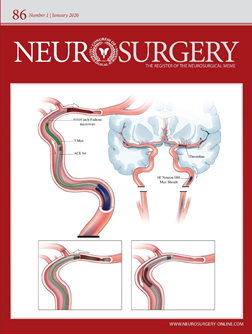
Published online in Neurosurgery, the official journal of the Congress of Neurological Surgeons (CNS), in August, the “Concussion Guidelines Step 2: Evidence for Subtype Classification,” provides support for re-thinking the way we diagnose concussion.

Angela K. Lumba-Brown, MD, co-director of the Stanford Brain Performance Center, Assistant Professor of Emergency Medicine at Stanford University, and co-author of the guideline, states that because concussion symptoms may vary greatly from person to person, early subtyping can direct strategies for recovery.
The study represents the work of a multidisciplinary team of experts across the country, unified to define five common concussion subtypes:

1. Headache/Migraine
2. Vestibular
3. Cognitive
4. Oculomotor
5. Anxiety/Mood

Notably, two concussion-associated conditions — sleep disturbance and cervical strain — often occur in relation to subtypes, but do not stand alone as concussion diagnostic criteria.

Through a rigorous review of the scientific literature and meta-analysis, the expert workgroup identified differences in the prevalence of each subtype shortly following head injury. Studying the first few days following a concussion is critical because the majority of scientific literature to-date examines concussion signs and symptoms spanning the first week to a month following injury, during which large variability in recovery patterns occur.

  • This study provides support for the presence of all five subtypes as early as three days following injury — directing an urgent change in the way concussion is currently diagnosed. For example:
    Anxiety and mood symptoms, often thought to manifest much later in the concussion course, are present in a large portion of patients early on.
  • Both children and adults exhibit vestibular impairments immediately following a concussion, representing an opportunity for early intervention with vestibular therapies.

This work demonstrates that a comprehensive, initial concussion assessment should incorporate evaluations of all five subtypes and two associated conditions. This work was supported by the Brain Trauma Evidence-Based Consortium, a U.S. Department of Defense-funded project in collaboration with the Brain Performance Center at Stanford University and the Brain Trauma Foundation.

To read the full Neurosurgery article, click here.

Editor’s Note: We encourage everyone to join the conversation online by using the hashtag #CNSGuidelines.

A Year in review: Making Progress on Neurosurgery’s Legislative and Regulatory Agenda

By Advocacy Agenda, Congress, Health Reform, Medical Innovation, Medical Liability, Prior Authorization, UncategorizedNo Comments

As we come to the end of a decade and head into 2020, it is fitting to reflect on the progress that the American Association of Neurological Surgeons (AANS) and the Congress of Neurological Surgeons (CNS) have made in advancing organized neurosurgery’s legislative and regulatory agenda to ensure that neurosurgical patients have timely access to quality care. At the beginning of 2019, we set forth an ambitious agenda, and throughout the year, the AANS and CNS continued to make progress on achieving our health policy goals.

Some highlights:

  • Protect Patients’ Timely Access to Care. Prior authorization is a cumbersome process that requires physicians to obtain pre-approval for medical treatments or tests before rendering care to their patients. To protect patients’ timely access to care, as leaders of the Regulatory Relief Coalition, the AANS and the CNS collaborated with key champions in Congress — Reps. Suzan DelBene (D-WA); Mike Kelly (R-PA); Roger Marshall, MD, (R-KS); and Ami Bera, MD, (D-CA) — to introduce H.R. 3107, the Improving Seniors’ Timely Access to Care Act. With 156 sponsors at year’s end, this bill would help protect patients from unnecessary delays in care by streamlining and standardizing prior authorization under the Medicare Advantage program.
  • Improve the Health Care Delivery System. Narrow insurance networks restrict patient access to the physician of their choice and leave patients vulnerable to unanticipated medical bills. Working to improve the health care delivery system, the AANS and the CNS successfully advocated for the introduction of legislation to protect patients from unanticipated medical bills. The Protecting People from Surprise Medical Bills Act (H.R. 3502), and the Stopping The Outrageous Practice (STOP) of Surprise Medical Bills Act (S. 1531), would hold patients harmless and ensure that they would only be responsible for in-network cost-sharing amounts when out-of-network providers take care of them. Patients would also be kept out of the middle of payment disputes between health plans and providers, and a process for fairly reimbursing providers for their services would be established.
  • Support Quality Resident Training & Education. An appropriate supply of well-educated and trained physicians — both in specialty and primary care — is essential to ensure access to quality health care services for all Americans. Looming physicians shortages — by 2032, the nation faces a physician shortfall of between 46,900 to 121,900 — threaten this access to care. To help ease this shortage and to support quality resident training and education, the AANS and the CNS successfully advocated for legislation to increase the number of Medicare-sponsored residency training positions. The Resident Physician Shortage Reduction Act ( 348 / H.R. 1763), with a total of 185 cosponsors, would increase the number of available medical residency positions by 15,000 over five years.
  • Continue Progress with Medical Innovations. America has a long tradition of excellence and innovation in patient care, and neurosurgeons have been on the cutting edge of these advancements. However, due to the medical device excise tax, American medical innovation and patient care have been at risk. Working with our partners in the medical technology industry for the past decade, the AANS and the CNS have been advocating for Congress to repeal this tax. This year, with the passage of H.R.1865, the Further Consolidated Appropriations Act, 2020, Congress demonstrated its commitment to continuing progress with medical innovation by repealing this tax. President Trump signed the legislation into law (P.L. 116-94). This bill also included increased funding for biomedical research in the neurosciences. Finally, Reps. Diana DeGette (D-Colo.) and Fred Upton (R-Mich.) released their initial vision for their Cures 2.0 initiative, which aims to modernize insurance coverage policies and improve access to life-saving cures. Cures 2.0 would build on the original 21st Century Cures Act (P.L. 114-255), which aspires to advance medical research and foster a new era of medical innovations.
  • Fix the Broken Medical Liability System. Medical lawsuit abuse is driving up health care costs, and driving good doctors out of the practice of medicine, leaving patients without the care they need when they need it. Many doctors — particularly in high-risk specialties like neurosurgery — are cutting back on high-risk and life-saving services, relocating to states with more patient-friendly liability laws, retiring early or leaving the practice of medicine altogether. To help fix the broken medical liability system, as a leader of the Health Coalition on Liability and Access, the AANS and the CNS worked with leaders in Congress to introduce H.R. 3656, the Accessible Care by Curbing Excessive LawSuitS (ACCESS) Act, which is modeled after proven reforms that are in place in California and Texas. In addition, legislation to help ensure that physicians are available to take care of patients with medical emergencies is pending before the House and Senate — the Good Samaritan Health Professionals Act (S. 1350) and the Health Care Safety Net Enhancement Act (H.R.3984).

We still have our work cut out for us to continue advocating for sound health policy that improves patient care, but 2019 will go down as a year in which the AANS and the CNS made significant positive strides.


AANS Neurosurgeon Spotlight: Winter 2020 – The Mind of a Neurosurgeon

By AANS Spotlight, GME, Loss of Life, MedEd, Voices of Neurosurgery DepartmentsNo Comments

In The Mind of a Neurosurgeon, join authors as they discuss navigating life as a neurosurgeon. From work-life balance to processing loss, pursuing creative outlets to the responsibility of training the next generation, neurosurgeons have a unique calling that leads to a special life serving others. Browse the articles and step into the mind of a neurosurgeon for stimulating conversations about the alternate mind, retirement, mindfulness, the outsider’s perspective, music and much more.

Check back later in January and February for more on The Mind of a Neurosurgeon. Here are just a few articles out now:

Stay Current

Access the Current Table of Contents

Follow @aansneurosurg on Twitter, Instagram and like AANS Neurosurgeon on Facebook!

Congress of Neurological Surgeons Releases New Pediatric Guidelines

By CNS Spotlight, Cross Post, Pediatrics, Quality ImprovementNo Comments

From time to time on Neurosurgery Blog, you will see us cross-posting or linking to items from other places when we believe they hit the mark on an issue. We wanted to bring attention to a Congress of Neurological Surgeons (CNS) evidence-based guideline on pediatric myelomeningocele that recently appeared in Neurosurgery, the official journal of the CNS, which publishes research on clinical and experimental neurosurgery covering the very latest developments in science, technology and medicine.

In August, Neurosurgery published the “Congress of Neurological Surgeons (CNS) Systematic Review and Evidence Based Guidelines for Pediatric Myelomeningocele,” which includes 6 chapters that systematically review the literature and include evidence-based recommendations about the timing of closure after birth, hydrocephalus, the impact of prenatal closure, and the effect of prenatal closure on ambulation ability and tethered spinal cord.

According to the CNS press release, “it is the Guideline Task Force’s aim that these systematic reviews and subsequent evidence-based recommendations will lead to improvement in the quality of life for infants and children with myelomeningocele.”

To read the full Neurosurgery article, click here. The complete guideline can also be found on the CNS website, here.

Editor’s Note: We encourage everyone to join the conversation online by using the hashtag #CNSGuidelines.

Catherine A. Mazzola, MD

David F. Bauer, MD


Paying Tribute to Neurosurgery’s Military Veterans

By Military Faces of NeurosurgeryNo Comments

Veterans Day is an appropriate opportunity to pay tribute to the contributions of the many military neurosurgeons who have made significant contributions and sacrifices. This storied history is filled with contributions from many of our field’s current and former leaders. We thought today our Neurosurgery Blog readership might want to revisit some of the profiles of these truly amazing individuals that we previously spotlighted.

Thank you to these and all other veterans who have served our nation with selflessness and dignity to protect the freedoms that we have all come to take for granted. Your service can never be honored enough. Happy Veterans Day one and all.