Tag

AANS

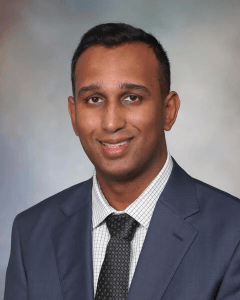
Cross Post: Celebrating the Life and Career of Sanjeet S. Grewal, MD (1987 – 2026)

By Cross Post, Faces of Neurosurgery, Loss of LifeNo Comments

Every so often, we use the Neurosurgery Blog to share or link to impactful events and stories from the broader medical community. Today, we want to bring your attention to a deeply moving tribute, written by Dario J. Englot, MD, PhD, honoring the life, legacy, and profound impact of a remarkable young neurosurgeon who recently passed away.  

Here is an excerpt from the In Memoriam honoring Sanjeet S. Grewal, MD:

“The field of neurosurgery lost one of its brightest rising leaders with the unexpected passing of Dr. Sanjeet S. Grewal on February 7, 2026. At just 38 years old, he had already built a career defined by technical mastery, academic productivity, mentorship, and an unwavering devotion to patients.   

Born in Ludhiana, India, and raised in Queens, New York, and later Fort Lauderdale, Florida, Dr. Grewal’s life was marked early by energy, curiosity, and determination that would later characterize his surgical career. His academic path reflected precocity and discipline. He entered a highly competitive combined undergraduate and medical pathway through Xavier University and the University of Cincinnati, earning his Bachelor of Science in Biology before completing his medical degree. He then matched at his first-choice program, the Mayo Clinic in Jacksonville, Florida, where he became one of the earliest residents in a newly established neurosurgery residency. As part of that inaugural cohort, he helped shape the culture of the program. He subsequently pursued fellowship training in surgical epilepsy at Mayo Clinic in Rochester, Minnesota, followed by stereotactic and functional neurosurgery training at Mayo Clinic in Florida.  

Dr. Grewal joined the faculty at Mayo Clinic in Florida during the height of the COVID pandemic, immediately assuming substantial clinical and academic responsibilities. Board-certified in 2023, he rose rapidly to leadership roles, serving as Director of Epilepsy and Movement Disorders and as Associate Program Director of the neurosurgery residency. Even early in his faculty career, he was widely regarded as being on an accelerated path toward full professorship….” 

Please join us in remembering Dr. Grewal’s dedication to our field and his patients by reading the full piece here: In Memoriam: Celebrating the Life and Career of Dr. Sanjeet S. Grewal (1987 – 2026)  | AANS Neurosurgeon 

Washington Committee: 50 Years of Advocacy and Impact

By AANS Spotlight, CNS Spotlight, NeurosurgeryNo Comments

Fifty years ago, the American Association of Neurological Surgeons (AANS) and Congress of Neurological Surgeons (CNS) recognized the growing impact of federal policy on medicine and took bold action: they established the AANS/CNS Washington Committee for Neurological Surgery. This formal presence in the nation’s capital has since served as the unified voice of neurosurgery in Congress and within federal agencies.

“Throughout its history, the Washington Committee has been critical to CNS’ mission of enhancing health and improving lives. We are grateful to our Washington Committee representatives for their tireless efforts to ensure healthcare policies are patient-centered and address the needs of both patients and neurosurgeons,” states Regina Shupak, CNS CEO. Since its inception in 1975, the Washington Committee has worked to advance neurosurgery, influence policy decisions, and advocate for patient access to high-quality neurosurgical care.

Over the decades, the Washington Committee broadened its focus to address the full range of federal policies impacting neurosurgical practice and patient care — from reimbursement and medical liability reform to quality reporting, research funding, and access to innovative technologies. This strategic expansion has ensured that neurosurgery remains at the table and it has also achieved meaningful policy victories.

To keep pace with a rapidly evolving policy landscape, the Washington Committee expanded its structure, establishing subcommittees led by neurosurgeon volunteers that focus on key areas such as coding and reimbursement, clinical guidelines, medical device regulation, public communications, and quality improvement. It also includes delegates to the American Medical Association to maintain influence in organized medicine. Supporting this work has grown from a single staff member to a team of five, complemented by experienced consultants and targeted coalitions that the Committee has established and supports to advance key advocacy priorities.

“The Washington Committee has been at the forefront of major health care policy issues for 50 years, successfully advocating for fair reimbursement, reducing regulatory burdens, and securing funding for critical neurosurgical research and training. Through its steadfast dedication and strategic advocacy, the AANS and the CNS have preserved access to life-saving neurosurgical care for patients while ensuring neurosurgeons can continue to innovate and lead in an evolving health care landscape,” states Katie O. Orrico, JD, AANS CEO.

“The Washington Committee’s accomplishments over the past five decades highlight the incredible dedication of our neurosurgeons — both in the operating room and in the halls of Congress — and it has been an honor to play a small role in helping advance sound health policy. As we look to the next 50 years, the work of the Washington Committee is more critical than ever to help neurosurgery navigate complex policy challenges and drive meaningful legislative and regulatory change to preserve the specialty for generations of neurosurgeons and patients to come,” Ms. Orrico added.

The Washington Committee remains committed to advancing policies that support neurosurgical excellence, scientific innovation, and equitable patient access. Its legacy of impact reflects the strength of neurosurgery’s collective voice — and its future depends on continued engagement from the neurosurgical community.

Editor’s Note: This article originally appeared in the Spring 2025 CNS Congress Quarterly. We hope you will share what you learn from our posts. We invite you to join the conversation on X by following @Neurosurgery, @AANSNeuro, and @CNS_Update.

Ann R. Stroink, MD, FAANS Retires from Neurological Surgery

By AANS Spotlight, CareerNo Comments

Ann R. Stroink, MD, FAANS, a neurosurgeon at the forefront of advocacy efforts, retired from neurosurgery practice at Carle BroMenn Medical Center on Nov. 22, 2023. Throughout her career, Dr. Stroink has been an indefatigable force in advocating — in the halls of Congress, before the Illinois state legislature, with health plans and within organized medicine — for sound health policy to ensure patients have timely access to care. Throughout her career, she held critical leadership roles within organized neurosurgery, including president of the Illinois State Neurosurgical Society, chair of the American Association of Neurological Surgeons (AANS)/Congress of Neurological Surgeons (CNS) Council of State Neurosurgical Societies, chair of the AANS/CNS Washington Committee for Neurological Surgery and AANS president.

Following her retirement from active neurosurgical practice, Dr. Stroink has taken on another crucial role, serving as the interim CEO of the AANS. “It’s an exciting opportunity to lead the most prestigious neurosurgical organization in the world,” said Dr. Stroink. “I’m really looking forward to my stint.”

Carle Health highlights Dr. Stroink’s dedication and contributions to their organization, pointing out that her affiliation with Carle BroMenn Hospital (then Brokaw Hospital) began when her father, Hans Stroink, MD, was a pathologist. Said Dr. Stroink,

I started working in the lab and that’s where I got the buzz. I performed autopsies with my father, but the first time I saw live tissue, I knew I wasn’t going to do anything else. I’m very happy to have served patients for years.

Dr. Stroink assisted her father from seventh grade until she left for college, maintaining a connection to Carle throughout her career, given the need for neurosurgical services in her community.

She also made her mark as a female neurosurgeon. Dr. Stroink attended Southern Illinois School of Medicine, the first U.S. school to enroll 30% of women. “Having already decided to make my career in medicine, I was acutely aware of the barriers to getting into medical school as a female,” states Dr. Stroink. On the 50th anniversary of the passage of Title IX in 2022, she shared her experiences on gender equity in neurosurgery in the California Association of Neurological Surgeons newsletter.

Dr. Stroink was the first woman to enter the neurosurgical residency program at the Mayo Clinic. “I’m really grateful to the Mayo Clinic because they didn’t have to accept a woman, but they did,” said Dr. Stroink. “I was very happy to be a resident. Even though it was a new experience for them to train a female resident, it was a benefit for them and me.”

In 1985, Dr. Stroink founded the Central Illinois Neuro Health Sciences practice in Bloomington, Ill. She spearheaded the creation of a neurosurgery resident program at the hospital and considers teaching doctors essential and one of her favorite parts of her work.

We wish Dr. Stroink all the best in her retirement from practicing neurological surgery.

Editor’s Note: We hope you will share what you learn from our posts. We invite you to join the conversation on Twitter by following @Neurosurgery and @NeurosurgeryRE and using the hashtag #Neurosurgery.

AANS Neurosurgeon Spotlight: Winter 2020 – The Mind of a Neurosurgeon Part III

By AANS Spotlight, Career, Faces of Neurosurgery, Food for thoughtNo Comments

From training appraisal to relocation, authors explore the neurosurgeon perspective in AANS Neurosurgeon’s The Mind of a Neurosurgeon. Prominent neurosurgeons discuss their unique experiences in a field in which few have the opportunity to work and thrive.

Changing Gears: Mid-Career Relocation as a Catalyst for Better Patient Care
Daniel Orringer, MD, FAANS

  • Inspirational leadership; state-of-the-art facilities; a cumbersome electronic medical record; affiliation with a top-notch medical school; and a culture and history of excellence.
  • Navigating geographic change – from Ann Arbor to New York.
  • Navigating institutional change – evaluating essential components of a routine.
  • A new team – leading with the patients’ interest in mind.

The Mindful Neurosurgeon and the Art of Doing What’s Right
Edward C. Benzel, MD, FAANS

  • The desire for personal gratification, professional advancement and monetary gain can lead one to their neurosurgical calling.
  • The mindful neurosurgeon does not look at a job from the perspective of the job being a commodity generator, but from the perspective of the job as a calling.
  • Good leaders are selfless guides, reflective and empathetic.
  • The truly mindful neurosurgeon values doing what is right over all else.

Building the Neurosurgical Mind: Critical Appraisal in Neurosurgical Training
Beverly C. Walters, MD

  • Neurosurgical training goals focus on specialty knowledge acquisition, development of technical skills involving eye-hand coordination, learning how to collect important patient data and enhancement of critical thinking ability.
  • Look at the structure of research that tries to promote changes in practice to develop skills in evaluation of data and to be able to decide, factually, whether the ideas are worthy of inclusion in clinical practice – or, more importantly, if they are not worthy.
  • This basic concept of understanding the successes and failures of clinical research in our specialty and development of the ability to use data in the treatment of patients became known at the end of the twentieth century as evidence-based medicine.

Read More from The Mind of a Neurosurgeon.

AANS Neurosurgeon Spotlight: Winter 2020 – The Mind of a Neurosurgeon

By AANS Spotlight, GME, Loss of Life, MedEd, Voices of Neurosurgery DepartmentsNo Comments

In The Mind of a Neurosurgeon, join authors as they discuss navigating life as a neurosurgeon. From work-life balance to processing loss, pursuing creative outlets to the responsibility of training the next generation, neurosurgeons have a unique calling that leads to a special life serving others. Browse the articles and step into the mind of a neurosurgeon for stimulating conversations about the alternate mind, retirement, mindfulness, the outsider’s perspective, music and much more.

Check back later in January and February for more on The Mind of a Neurosurgeon. Here are just a few articles out now:

Stay Current

Access the Current Table of Contents

Follow @aansneurosurg on Twitter, Instagram and like AANS Neurosurgeon on Facebook!