Chris was born Dec 22, 1961, in Milton, MA. His family had a legacy of several generations attending the prominent Milton Academy, and Chris followed in those footsteps, as he was often proud to point out. He attended Princeton University, followed by medical school at Tufts. His career was shaped by his neurosurgical training at Thomas Jefferson University, where he developed a passion for cerebrovascular surgery under the guidance of Dr. William Buchheit. He then pursued a fellowship in Pittsburgh under Drs. Peter Janetta, Dade Lundsford, and Douglas Kondziolka, where he honed his microvascular and radiosurgery skills.
Chris joined the faculty at Northwestern in 1996 after finishing training. It was a unique time in the department, as Dr. Hunt Batjer had started as Chair only the year before, and the faculty was being completely revamped. Chris came to Dr. Batjers’ attention when, at an AANS/CNS Joint Officers meeting at the O’Hare Hilton, Dr. Buchheit and Dr. Ed Laws approached him and said, “We have the perfect faculty member for your new department; his name is Chris Getch”. Hunt called his cell immediately and had a 30-minute discussion, followed by an invitation for an interview in Chicago. His recruitment provided Chris with an opportunity to play a significant role in shaping the program’s future. Chris rose to the rank of Professor of Neurosurgery at Northwestern and trained a generation of neurosurgeons during his time there. He was a master surgeon who delighted in performing rigorous cerebrovascular procedures, especially microvascular decompressions for trigeminal neuralgia and hemifacial spasm. He would show off the anatomy of a procedure to the entire operating room, explaining everything on the screen while mentoring the residents. He was fascinated by facial pain and even barged into one of our offices one afternoon, demanding to see a Schaltenbrand-Wahren stereotactic atlas to better understand the procedure that a patient he had seen in the clinic that day had undergone elsewhere.
We were his trainees (BB) and junior partners (BB and JR). Chris always made time to go over case plans with us and to join us in the operating room during the early years of our practice to provide support and technical assistance with challenging anatomy. His steady presence gave us the confidence to stretch our skills and become better surgeons. His rounds were legendary as he was able to spot subtle clinical signs and symptoms that remained invisible to the rest of the team. No one could sense the onset of vasospasm sooner than Chris. Neuroradiologists were always on alert for his phone calls to notify them of subtle findings they may have missed, but Chris did not. He was intense but amiable in how he challenged everyone around him. His laugh could be heard down the hall as he engaged students, colleagues, nurses, and partners in a jovial and collegial way that was his signature. He expected excellence but was the first to admit his failures and defeats. He would let you know when you fell short, but also acknowledged when you performed well. He suffered deeply with complications and always put his patients first. He was in love with the aesthetic of clean microsurgery and insisted on high standards of surgical finesse with his trainees. He was a superior partner who would come in on off hours and weekends to handle cerebrovascular cases that came into the hospital while someone not specializing in those patients was on call. In fact, the last case he performed was an aneurysm clipping on a Sunday morning in one of these situations. He published over 75 peer-reviewed papers and numerous book chapters related to the surgical treatment of cerebrovascular disease and facial pain.
Importantly, Chris had significant influence outside the operating room. He served on the Board of Think First and worked with the Brain Aneurysm Foundation. He was the President of the Illinois State Neurosurgical Society and a driving presence during the state’s medical malpractice crisis. He was elected to the Executive Council of the AANS/CNS Joint Section on Cerebrovascular Surgery and the Executive Committee of the Society of Neurological Surgeons. He served as a guest examiner for the ABNS oral exams.
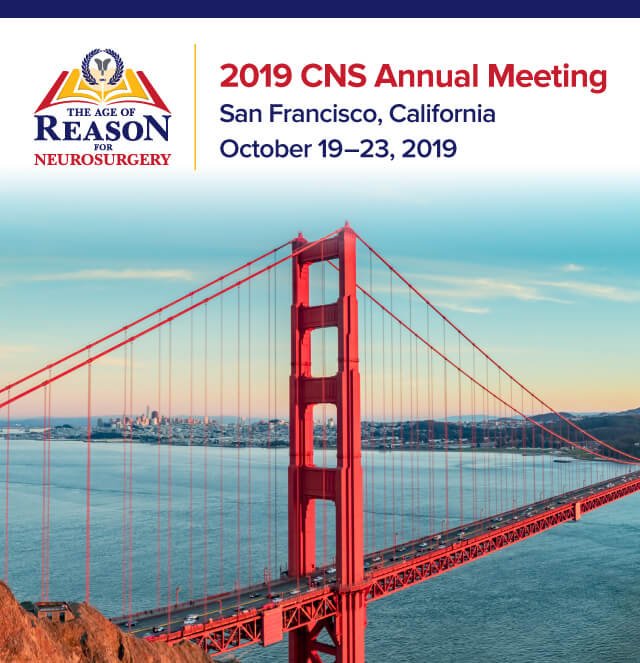
He served the Congress of Neurological Surgeons (CNS) in numerous roles, including a 10-year term on the Executive Committee. He was Chair of the Host Committee for the 1997 Annual Meeting, Scientific Program Chair for the 2005 Annual Meeting, and Chairperson of the 2006 Annual Meeting. He served as Vice President of the CNS from 2009 to 2010 and as President of the CNS from 2010 to 2011.
Chris had four sons from his two marriages. He delighted in adding the suffix “bear” to their names whenever he spoke of them (no matter how old they were!). He loved watching them play sports and doing outdoor activities with them. A special place for Chris was his family’s camp in the Canadian wilderness. Whenever possible, they made a family pilgrimage to that site. He was an avid model railroad enthusiast who maintained a large setup in his basement to which he was always adding new and often rare train cars or scenery.
Tributes to Chris’ influence have abounded in the wake of his untimely passing in January 2012. In 2015, the CNS and the National Institute of Neurological Disorders and Stroke (NINDS) established the NINDS/CNS K12 Getch Scholar Award. This 2-year award, funded by the CNS Foundation and NINDS, supports young surgeons early in their practice who wish to develop into productive surgeon-scientists. The Northwestern University Department of Neurosurgery has endowed the Getch Lecture, given each year during resident graduation. In recognition of the value Chris placed on multidisciplinary collaboration, the Department annually awards the Christopher Getch Clinical Excellence Award to a non-neurosurgeon or group that significantly contributes to the Department’s mission. In addition, the Brain Aneurysm Foundation Medical Advisory Board and Board of Directors established The Christopher C. Getch, MD, Chair of Research. The Illinois State Neurosurgical Society annually gives a Christopher Getch Distinguished Service Award to a member neurosurgeon along with the ingredients for Chris’s favorite drink, the Dark and Stormy.
Authors:

Joshua Rosenow, MD
Northwestern University Feinberg School of Medicine
Chicago, IL

Bernard Bendok, MD
Mayo Clinic
Phoenix, AZ

Hunt Batjer, MD
University of Texas at Tyler School of Medicine
Tyler, TX