This is Salient

Stop blending in & start leaving your mark on the web


Experience

What real creative freedom feels like in a theme

Pixel Perfection

Salient was built with a high attention to details both in design & code

1
1

Prior Authorization: A State-Level Perspective

By Prior AuthorizationNo Comments

Grassroots advocacy has played a crucial role in addressing the burdensome and increasingly complex prior authorization processes that have frustrated neurosurgery patients, leading to unnecessary delays in care, worsening neurological deficits, and denial of essential services. Neurosurgeons have faced overwhelming administrative tasks that are both time-consuming and require additional staffing, significantly increasing overhead costs. State governments are uniquely positioned to collaborate with grassroots efforts in shaping advocacy initiatives and developing state legislation to address these challenges.

A common question is why both federal and state legislation are necessary to drive progress. The simple answer is that each plays a unique role. While the federal government influences prior authorization through national programs like Medicare, states regulate private insurance. States have more detailed and diverse rules regarding prior authorization, particularly for Medicaid and state-regulated health insurance plans. Each state establishes its own laws or regulations on how insurers must operate, and the degree of regulation can differ significantly from one state to another. Additionally, state law is strengthened by state-level insurance commissioners, who oversee prior authorization processes for private insurers licensed in the state. These commissioners have the authority to enforce state laws and investigate complaints regarding prior authorization denials or delays.

By working together, both the federal and state levels of government can improve the system for all patients and physicians. States are particularly well-positioned to advance these efforts on a local level.

As of 2024, ten states have passed legislation reforming the prior authorization process, with more states actively considering similar measures. These states include Colorado, Illinois, Maine, Maryland, Minnesota, Mississippi, Oklahoma, Vermont, Virginia, and Wyoming. The reforms vary by state, but generally focus on reducing administrative burdens, improving transparency, and speeding up the prior authorization approval process to minimize delays in patient care.

Some key aspects of these state reforms include:

  • Shorter response times for urgent and non-urgent prior authorization requests;
  • Increased transparency, requiring insurers to publish their PA requirements and processes online;
  • Extended validity of prior authorizations for chronic conditions or ongoing treatments to prevent repeated PA requests; and
  • Gold-card programs currently available in two states:
  1. Wyoming: Providers with a strong approval history can bypass prior authorizations for select services. Payers are required to respond within 72 hours for urgent requests and within five calendar days for non-urgent requests.
  2. Texas: The gold-card law allows providers with a 90% approval rate for prior authorization requests over a six-month period to completely bypass the prior authorization process for certain procedures.

When it comes to reforming prior authorization, much of the work happens behind the scenes. The American Medical Association (AMA) Advocacy Resource Center (ARC) plays a crucial role in improving prior authorization at the state level by advocating for reform. The ARC partners with state lawmakers and medical societies to promote legislation aimed at streamlining prior authorization processes within individual states. This includes pushing for laws that set clear timelines for approvals, reduce unnecessary delays, and create transparency in insurance practices.

The ARC provides state-specific resources, tools, and data to assist health care professionals in advocating for change and ensuring compliance with evolving regulations. Additionally, it works with state insurance commissioners and other stakeholders to standardize prior authorization requirements, helping to eliminate variations that create inefficiencies. By focusing on state-level reforms, the ARC ensures that patients receive timely care and that the regulatory environment supports a more efficient, patient-centered health care system.

The roles of state and federal legislators in health care are deeply intertwined, with federal lawmakers setting broad national policies and funding mechanisms, while state legislators tailor and implement these policies within their specific contexts. This balance allows for both consistency in national health care programs and flexibility to address local health care needs.

For further information, visit fixpriorauth.org.


Editor’s Note: We hope you will share what you learn from our posts. We invite you to join the conversation on X by following @Neurosurgery and using the hashtags #PriorAuth and #FixPriorAuth.


Ann R. Stroink, MD, FAANS, FACS

AMA Council on Legislation

AMA Mobility Caucus AANS/CNS Neurosurgery Delegation

Adjunct Professor of Neurosurgery Illinois State University

Washington Committee: 50 Years of Advocacy and Impact

By AANS Spotlight, CNS Spotlight, NeurosurgeryNo Comments

Fifty years ago, the American Association of Neurological Surgeons (AANS) and Congress of Neurological Surgeons (CNS) recognized the growing impact of federal policy on medicine and took bold action: they established the AANS/CNS Washington Committee for Neurological Surgery. This formal presence in the nation’s capital has since served as the unified voice of neurosurgery in Congress and within federal agencies.

“Throughout its history, the Washington Committee has been critical to CNS’ mission of enhancing health and improving lives. We are grateful to our Washington Committee representatives for their tireless efforts to ensure healthcare policies are patient-centered and address the needs of both patients and neurosurgeons,” states Regina Shupak, CNS CEO. Since its inception in 1975, the Washington Committee has worked to advance neurosurgery, influence policy decisions, and advocate for patient access to high-quality neurosurgical care.

Over the decades, the Washington Committee broadened its focus to address the full range of federal policies impacting neurosurgical practice and patient care — from reimbursement and medical liability reform to quality reporting, research funding, and access to innovative technologies. This strategic expansion has ensured that neurosurgery remains at the table and it has also achieved meaningful policy victories.

To keep pace with a rapidly evolving policy landscape, the Washington Committee expanded its structure, establishing subcommittees led by neurosurgeon volunteers that focus on key areas such as coding and reimbursement, clinical guidelines, medical device regulation, public communications, and quality improvement. It also includes delegates to the American Medical Association to maintain influence in organized medicine. Supporting this work has grown from a single staff member to a team of five, complemented by experienced consultants and targeted coalitions that the Committee has established and supports to advance key advocacy priorities.

“The Washington Committee has been at the forefront of major health care policy issues for 50 years, successfully advocating for fair reimbursement, reducing regulatory burdens, and securing funding for critical neurosurgical research and training. Through its steadfast dedication and strategic advocacy, the AANS and the CNS have preserved access to life-saving neurosurgical care for patients while ensuring neurosurgeons can continue to innovate and lead in an evolving health care landscape,” states Katie O. Orrico, JD, AANS CEO.

“The Washington Committee’s accomplishments over the past five decades highlight the incredible dedication of our neurosurgeons — both in the operating room and in the halls of Congress — and it has been an honor to play a small role in helping advance sound health policy. As we look to the next 50 years, the work of the Washington Committee is more critical than ever to help neurosurgery navigate complex policy challenges and drive meaningful legislative and regulatory change to preserve the specialty for generations of neurosurgeons and patients to come,” Ms. Orrico added.

The Washington Committee remains committed to advancing policies that support neurosurgical excellence, scientific innovation, and equitable patient access. Its legacy of impact reflects the strength of neurosurgery’s collective voice — and its future depends on continued engagement from the neurosurgical community.

Editor’s Note: This article originally appeared in the Spring 2025 CNS Congress Quarterly. We hope you will share what you learn from our posts. We invite you to join the conversation on X by following @Neurosurgery, @AANSNeuro, and @CNS_Update.

Prior Authorization’s Hidden Toll: How Bureaucratic Barriers Exhaust Healthcare Teams and Delay Patient Care

By Prior AuthorizationNo Comments

The mechanism of prior authorization necessitates that an insurance company grants approval for specific treatments before assuming financial responsibility. This includes surgery but also clinical tools such as imaging and medication. This bureaucratic impediment functions mostly as a deterrent, a labyrinthine cacophony of obfuscation. In the words of Sir Topham Hatt, it causes confusion and delay. The deleterious impact on patients is palpable, and the toll on medical professionals is equally corrosive.

Data from the American Medical Association (AMA) in 2023 noted that 94% of physicians reported that prior authorization delays care. Nearly 1 in 4 physicians report that the prior authorization process resulted in serious adverse event to their patient. This bureaucratic quagmire results in real harm to real patients.

Yet, beyond the well-documented patient harm lies an underappreciated consequence: the stress imposed upon our health care staff. No one dedicates their life to health care only to have to attempt the daily Sisyphean task of try to win the coveted prior authorization. The same AMA study noted that physicians and their staff spend 12 hours each week completing prior authorizations. On average, a practice completes 43 prior authorizations for each physician per week.

To be blunt, there are legitimate economic apparatus in the insurance market that warrant a prior authorization structure but the process has become corrupt. It’s a tangible manifestation of a system designed to interpose a wedge between physician and patient in a manner which is borderline insidious. I’ve written about prior authorization for about a decade; here, herehere, and here to name a few.

Rather than regurgitate the same arguments, I thought I would take the opportunity to ask our staff about their journey through the Byzantine web weaved by the forces of prior authorization.

They were more than happy to oblige. So what precisely did they have to say?


Haley N. Kirby, MSEd., ATC/L

Director of Operations for Neurosurgery

“Prior authorization has become an increasing threat to our ability to run an efficient practice. We can’t keep up. It’s pervasive, and it’s impacting my staff and our ability to treat patients. The other challenge we feel is that it’s hard to win the game if the rules keep changing in the opposition’s favor. We have difficulty planning an actual reliable OR schedule.”


Samantha Schmitt

Neurosurgery Practice Manager

“For 7 doctors, we utilize 3 full-time staff just to do prior authorizations for hospital procedures. Each authorization can take anywhere from 15 minutes to 3 hours. If not more, waiting on a response and getting to the correct area of authorization.”


Victoria Hyatt, PA-C

Spine Clinic Physician Assistant

“Prior authorization stops us from being able to take care of patients, and it’s very stressful. They always wait to the last minute, and it creates so much a tension. I feel it’s an intentional tactic so that we are forced to cancel the case. And when we can’t get approval, the patients are looking to us for answers.”

Chelsea Lukenbill, PA

Spine Physician Assistant

“It’s difficult to even set up the call to speak with a provider. It’s not uncommon to be transferred multiple times before you speak with the person who schedules the appointments. Then you have to schedule a time for them to call you, which may not be until days later. When you do finally have the scheduled phone call, the provider may not even be in the same specialty.”


Stephanie James

Neurosurgery Patient Navigator and Coordinator

“I see where cases get delayed and some patients surgery dates have to be pushed out further because of the prior authorization, and all I can say is that Prior authorization really stinks and it’s the patients who are ones paying the price. Some of the patients really need the surgeries but the authorizations are what stop them.”


Erin Roberts, RN

Spine Nurse Emeritus

Erin has probably had the most interaction in our prior authorization practice, and wrote about it here.

“My favorite subject… When I deal with denials and call insurance companies, I’m transferred a minimum of three times, and everyone tells me completely contradicting information- and then when I call again the next day to check the status of things- I am again told conflicting information. This is difficult in urgent patients who need surgery within 2-3 weeks. Turnaround time for case determinations varies widely with insurance companies and we are often at their whim of determining when patients can have approval for surgery.”


Personally, I think the quote from my patient in clinic sums it up the best.

Patient CK

Spine Patient

“What the insurance company did to me in delaying my surgery was criminal. I was suffering for months. It was horrible, absolutely horrible.”

Our patients and our clinical teams deserve better. Tell Congress to fix prior authorization. The Improving Seniors’ Timely Access to Care Act has been reintroduced in the House and Senate (S. 1816/H.R. 3514). Its goal is to streamline prior authorization for Medicare Advantage.

It’s a start in the right direction. I know Haley, Sam, Tori, Stephanie, Ashley, and Erin would really appreciate it.

Editor’s Note: We hope you will share what you learn from our posts. We invite you to join the conversation on X by following @Neurosurgery and using the hashtags #FixPriorAuth and #PriorAuth.


Richard P. Menger, MD, MPA, FAANS
USA Spine Institute
Mobile, Ala.

Prior Authorization: Best of Intentions Turned Barrier to Care?

By Prior AuthorizationNo Comments

Prior authorization (noun): the process by which an insurance company evaluates a recommended health care service including a prescription, test, or treatment, is medically necessary and covered by the insurance plan.

Initially prior authorization was valiantly born to try and reduce unnecessary testing and control health care spending. With concerns that physicians were ordering unnecessary tests, prescribing unindicated medications, or moving forward with unproven treatments, prior authorization was implemented. This process, purportedly using guidelines to determine appropriateness of care, requires pre-approval for prescribed testing and treatments. The irony is that it has likely curtailed appropriate testing and treatment, while simultaneously delaying appropriate care for our patients and contributing to increased health care costs in overhead spending. A survey by the American Medical Association found that 69% of physicians reported that prior authorization resulted in ineffective initial treatments, 68% reported prior authorization resulting in additional office visits, 42% stated this resulted in immediate care or emergency department visits, and 29% reported this process resulted in a hospitalization. The Council for Affordable Quality Healthcare reported an increase in $1.3 billion on administrative costs in one year specifically related to prior authorizations.

In the end, this costs our patients. It costs them access to necessary medications, indicated testing to help guide treatment, and delays or cancels necessary procedures and surgeries. Patients are denied covered care, leading them to either continue in suffering or pay out of pocket for health care which should be covered by their insurance plans. Equally bad, the bureaucracy of prior authorizations can lead to delays in diagnosis or delays in care — placing patients at risk for worsening disease processes and the need for more significant interventions.

Where did this go so wrong? How is this affecting our patients? And most importantly, what can we do about it?

In this upcoming series on the Neurosurgery Blog, we highlight the current state of prior authorization and the impact it has had on our ability to provide appropriate care to our patients. We also highlight what we, as a specialty and profession, are doing to improve this process for neurosurgeons, physicians, and, most importantly, our patients.

Editor’s Note: We hope you will share what you learn from our posts. We invite you to join the conversation on X by following @Neurosurgery and using the hashtags #FixPriorAuth and #PriorAuth.


Krystal L. Tomei, MD, MPH, FAANS, FACS, FAAP
Rainbow Babies and Children’s Hospital
Cleveland, Ohio

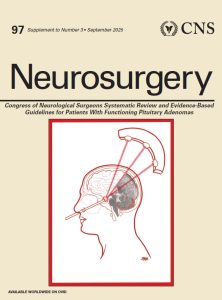
Cross Post: CNS Publishes New Guidelines on Care for Adults with Functioning Pituitary Adenomas

By Brain Tumor, Cross PostNo Comments

From time to time on the Neurosurgery Blog, you will see us cross-posting or linking to items from other places when we believe they hit the mark on an issue. We wanted to bring attention to a recent online-only supplement in Neurosurgery, “Congress of Neurological Surgeons Systematic Review and Evidence-Based Guidelines for Patients With Functioning Pituitary Adenomas.” Neurosurgery is the official journal of the Congress of Neurological Surgeons, which provides multimedia, prompt publication of scientific articles on clinical or experimental surgery topics important for the brain, spine, and peripheral nerves, reviews, and other information of interest to readers across the world.

Published August 15, 2025, the supplement provides comprehensive, evidence-based guidelines on the care of adults with functioning pituitary adenomas (FPA). Tailored for neurosurgeons, endocrinologists, and other specialists, the guidelines mark a pivotal step in standardizing care, optimizing patient outcomes, and promoting multidisciplinary coordination.

The CNS and the American Association of Neurological Surgeons (AANS) have endorsed the guidelines. The initiative was led by Isabelle M. Germano, MD, MBA, Professor of Neurosurgery at the Icahn School of Medicine at Mount Sinai and Chair of the AANS/CNS Section on Tumors (2022–2024), along with D. Ryan Ormond, MD, PhD, Associate Professor of Neurosurgery at the University of Colorado School of Medicine. Together, they assembled and worked with a multidisciplinary team of 18 experts in neurosurgery, endocrinology, neuroradiology, and radiation oncology from across the country to develop these guidelines.

To access the full supplement, click here.


Artwork by Maria Margalit Bederson, MD, MS ©2025. Used with permission. All rights reserved.

100 Years Young and Still Towering: Celebrating Dr. Don Dohn, Neurosurgery’s Living Legend

By Faces of Neurosurgery, Mentoring, Neurosurgery MonthNo Comments

There are neurosurgeons who make a mark — and then there’s Dr. Donald F. Dohn. On August 16, Don turns 100 years old, and we’re not just lighting candles — we’re celebrating a legacy that shaped the very foundation of modern neurosurgery. From his early days in Buffalo, New York, to the hallowed halls of the Cleveland Clinic, Don’s story is the stuff of legend. After earning his medical degree from the University of Buffalo, he trained under giants like Dr. Walter Hamby and Dr. W. James Gardner, Jr., becoming a force of nature in his own right. He didn’t just train neurosurgeons — he built neurosurgical training. Over 45 neurosurgeons and fellows passed through his tutelage as he helped formalize the educational structure of neurosurgical residency, moving it beyond the traditional apprenticeship model.

Read More

Celebrating 75 Years of NINDS: Dr. Christopher Getch’s Enduring Impact on Neurosurgery and Service

By CNS Spotlight, Faces of Neurosurgery, Medical ResearchNo Comments

Chris was born Dec 22, 1961, in Milton, MA. His family had a legacy of several generations attending the prominent Milton Academy, and Chris followed in those footsteps, as he was often proud to point out. He attended Princeton University, followed by medical school at Tufts. His career was shaped by his neurosurgical training at Thomas Jefferson University, where he developed a passion for cerebrovascular surgery under the guidance of Dr. William Buchheit. He then pursued a fellowship in Pittsburgh under Drs. Peter Janetta, Dade Lundsford, and Douglas Kondziolka, where he honed his microvascular and radiosurgery skills.

Chris joined the faculty at Northwestern in 1996 after finishing training. It was a unique time in the department, as Dr. Hunt Batjer had started as Chair only the year before, and the faculty was being completely revamped.  Chris came to Dr. Batjers’ attention when, at an AANS/CNS Joint Officers meeting at the O’Hare Hilton, Dr. Buchheit and Dr. Ed Laws approached him and said, “We have the perfect faculty member for your new department; his name is Chris Getch”.  Hunt called his cell immediately and had a 30-minute discussion, followed by an invitation for an interview in Chicago.  His recruitment provided Chris with an opportunity to play a significant role in shaping the program’s future. Chris rose to the rank of Professor of Neurosurgery at Northwestern and trained a generation of neurosurgeons during his time there. He was a master surgeon who delighted in performing rigorous cerebrovascular procedures, especially microvascular decompressions for trigeminal neuralgia and hemifacial spasm. He would show off the anatomy of a procedure to the entire operating room, explaining everything on the screen while mentoring the residents. He was fascinated by facial pain and even barged into one of our offices one afternoon, demanding to see a Schaltenbrand-Wahren stereotactic atlas to better understand the procedure that a patient he had seen in the clinic that day had undergone elsewhere.

We were his trainees (BB) and junior partners (BB and JR). Chris always made time to go over case plans with us and to join us in the operating room during the early years of our practice to provide support and technical assistance with challenging anatomy. His steady presence gave us the confidence to stretch our skills and become better surgeons. His rounds were legendary as he was able to spot subtle clinical signs and symptoms that remained invisible to the rest of the team. No one could sense the onset of vasospasm sooner than Chris. Neuroradiologists were always on alert for his phone calls to notify them of subtle findings they may have missed, but Chris did not. He was intense but amiable in how he challenged everyone around him. His laugh could be heard down the hall as he engaged students, colleagues, nurses, and partners in a jovial and collegial way that was his signature. He expected excellence but was the first to admit his failures and defeats. He would let you know when you fell short, but also acknowledged when you performed well. He suffered deeply with complications and always put his patients first. He was in love with the aesthetic of clean microsurgery and insisted on high standards of surgical finesse with his trainees.  He was a superior partner who would come in on off hours and weekends to handle cerebrovascular cases that came into the hospital while someone not specializing in those patients was on call. In fact, the last case he performed was an aneurysm clipping on a Sunday morning in one of these situations. He published over 75 peer-reviewed papers and numerous book chapters related to the surgical treatment of cerebrovascular disease and facial pain.

Importantly, Chris had significant influence outside the operating room. He served on the Board of Think First and worked with the Brain Aneurysm Foundation. He was the President of the Illinois State Neurosurgical Society and a driving presence during the state’s medical malpractice crisis. He was elected to the Executive Council of the AANS/CNS Joint Section on Cerebrovascular Surgery and the Executive Committee of the Society of Neurological Surgeons. He served as a guest examiner for the ABNS oral exams.

He served the Congress of Neurological Surgeons (CNS) in numerous roles, including a 10-year term on the Executive Committee. He was Chair of the Host Committee for the 1997 Annual Meeting, Scientific Program Chair for the 2005 Annual Meeting, and Chairperson of the 2006 Annual Meeting. He served as Vice President of the CNS from 2009 to 2010 and as President of the CNS from 2010 to 2011.

Chris had four sons from his two marriages. He delighted in adding the suffix “bear” to their names whenever he spoke of them (no matter how old they were!). He loved watching them play sports and doing outdoor activities with them. A special place for Chris was his family’s camp in the Canadian wilderness. Whenever possible, they made a family pilgrimage to that site. He was an avid model railroad enthusiast who maintained a large setup in his basement to which he was always adding new and often rare train cars or scenery.

Tributes to Chris’ influence have abounded in the wake of his untimely passing in January 2012. In 2015, the CNS and the National Institute of Neurological Disorders and Stroke (NINDS) established the NINDS/CNS K12 Getch Scholar Award. This 2-year award, funded by the CNS Foundation and NINDS, supports young surgeons early in their practice who wish to develop into productive surgeon-scientists. The Northwestern University Department of Neurosurgery has endowed the Getch Lecture, given each year during resident graduation. In recognition of the value Chris placed on multidisciplinary collaboration, the Department annually awards the Christopher Getch Clinical Excellence Award to a non-neurosurgeon or group that significantly contributes to the Department’s mission. In addition, the Brain Aneurysm Foundation Medical Advisory Board and Board of Directors established The Christopher C. Getch, MD, Chair of Research. The Illinois State Neurosurgical Society annually gives a Christopher Getch Distinguished Service Award to a member neurosurgeon along with the ingredients for Chris’s favorite drink, the Dark and Stormy.

Authors:

Joshua Rosenow, MD
Northwestern University Feinberg School of Medicine
Chicago, IL


Bernard Bendok, MD
Mayo Clinic
Phoenix, AZ


Hunt Batjer, MD
University of Texas at Tyler School of Medicine
Tyler, TX

Celebrating 75 Years of NINDS: The Legacy and Impact of the Surgical Neurology Branch

By Medical Innovation, Medical ResearchNo Comments

This year marks the 75th anniversary of the National Institute of Neurological Disorders and Stroke (NINDS), a monumental milestone that offers an opportunity to reflect on its remarkable contributions to neurology and human neuroscience. Among the many significant components of NINDS, the Surgical Neurology Branch (SNB) stands out for its pioneering advancements and transformative impact on the treatment of neurological disorders. Established with the vision of integrating surgical techniques with neurological research, the SNB has played an instrumental role in shaping modern neurosurgery and advancing human neuroscience.

The SNB was established to address the growing need for specialized surgical interventions in the treatment of neurological disorders. Over the years, the SNB has become synonymous with innovation, spearheading groundbreaking research and developing novel surgical techniques that have revolutionized patient care. This translational approach, integral to the SNB, has led to significant advancements in the understanding and treatment of a wide range of neurological conditions. Many dedicated SNB clinician-investigators and basic scientists, including Maitland Baldwin, Igor Klatzo, John M. Van Buren, Ayub K. Ommaya, Richard J. Youle, Edward H. Oldfield, and Russell R. Lonser, have made significant advancements in understanding and treating various neuropathological conditions, including brain tumors, epilepsy, spinal cord injuries, and movement disorders. Their work has provided fundamental insights for delineating differences between cytotoxic and vasogenic edema, advancing treatments for Cushing disease, studying the effects of vascular endothelial growth factor, developing new methods for central nervous system drug delivery, and understanding the underlying pathophysiology and biology of familial tumor syndromes and malignant gliomas.

By fostering an innovative environment that bridges the gap between laboratory research and clinical practice, the SNB has been at the forefront of medical breakthroughs that have improved the lives of countless patients. This commitment to patient-centered care is central to the SNB’s mission. It is reflected in its focus on conducting cutting-edge research and clinical trials aimed at developing new treatments for neurological disorders, as well as translating basic scientific discoveries to the bedside. The branch is dedicated to providing compassionate, individualized treatment plans that address the unique needs of each patient evaluated and treated at the NIH Clinical Center, the world’s largest hospital dedicated solely to clinical research. This approach involves close collaboration between neurosurgeons, neurologists, radiologists, and other healthcare professionals to ensure that patients receive comprehensive, multidisciplinary care. The SNB also places a strong emphasis on patient education and empowerment. By providing patients and their families with detailed information about their condition and treatment options, the SNB helps them make informed decisions about their care. This patient-centered approach not only improves clinical outcomes but also enhances the overall patient experience.

An equally critical component of the SNB’s mission is to train and mentor the next generation of neurosurgeons. Over its history, dozens of former fellows and staff have gone on to become leaders of academic neurosurgery and chairs of neurosurgical departments. In 2010, the SNB further solidified its commitment to education by developing a residency-training program in neurological surgery. This program is designed to provide comprehensive training that encompasses clinical excellence, research acumen, and innovative thinking. By integrating rigorous clinical training with robust research opportunities, the SNB residency program aims to produce neurosurgeons who are well-equipped to tackle the complexities of neurological disorders and contribute to the advancement of neurosurgery. The SNB’s commitment to education also extends beyond its training program, with faculty members regularly participating in national and international conferences, workshops, and symposia. These efforts ensure that the latest advancements in neurosurgery are disseminated widely, fostering a global community of practitioners who are equipped with the knowledge and skills to provide the highest standard of care.

As NINDS celebrates its 75th anniversary, the SNB remains committed to advancing the fields of neurosurgery and human neuroscience through innovative research, education, and patient care. The future holds exciting possibilities, with ongoing research into new surgical techniques, neurotechnologies, and therapeutic approaches that have the potential to further transform the treatment of neurological disorders. The SNB’s legacy of excellence and innovation serves as a testament to the vision and dedication of its founders as well as the many talented individuals who have contributed to its success over the years. As we look ahead to the next 75 years, the SNB will continue to play a central role in shaping modern neurosurgery and advancing human neuroscience, paving the way for discoveries and treatments that will improve the lives of patients around the world.

Kareem A. Zaghloul, MD, PhD
National Institute of Neurological Disorders and Stroke, National Institutes of Health
Bethesda, Md.

Memorial Day Cross Post: Honoring Those Who Serve

By Cross Post, Global Neurosurgery, Humanitarian, Military Faces of NeurosurgeryNo Comments

This Memorial Day, we honor those who gave their lives in service to our country and those who carry the spirit of service forward in extraordinary ways by volunteering to provide medical care to those injured in current global conflicts. In this spirit, we share with our readers the remarkable stories of several neurosurgeons in Ukraine.

The first article, “An Island of Mercy: An American Veteran’s View from Ukraine,” published in the Journal of Trauma and Acute Care Surgery, is authored by Rocco A. Armonda, MD (the 2025 recipient of the American Association of Neurological Surgeons Humanitarian Award), Andrii Sirko, MD and Alex B. Valadka, MD. The second is “The Road Back to Dnipro: Third Time’s a Charm!” published in the World Federation of Neurosurgical Societies’ May 16 newsletter by Drs. Armonda, Sirko, Valadka and Bohdan Sirko, MD.

Read More

Cross-Post: The birth of modern military neurosurgery through the eyes of Harvey Cushing’s war memoir

By AANS Spotlight, Cross PostNo Comments

From time to time on the Neurosurgery Blog, you will see us cross-posting or linking to items from other places when we believe they hit the mark on an issue. April 8 marks World Neurosurgeons Day, celebrated annually on the birthday of Dr. Harvey Cushing. Dr. Cushing is regarded as the father of modern neurosurgery. Read More

Overview of the Open Payment Database: What do I need to know?

By NeurosurgeryNo Comments

The intertwining relationship between industry and medicine has been evident and ever-so apparent in recent decades. While these relationships are vital for innovation, concerns of potential conflict of interest (COI) have called into question the objectivity of scientific research and patient care. To help alleviate these concerns, the Centers for Medicare & Medicaid Services (CMS) opted to increase the transparency of physician-industry interactions. Read More

Cross-Post: High-Accuracy Augmented Reality Guidance for Intracranial Drain Placement Using a Standalone Head-Worn Navigation System: First-in-Human Results

By CNS Spotlight, Cross PostNo Comments

From time to time on the Neurosurgery Blog, you will see us cross-posting or linking to items from other places when we believe they hit the mark on an issue. We wanted to bring attention to a recent publication in Neurosurgery, the official journal of the Congress of Neurological Surgeons, which provides multimedia, prompt publication of scientific articles on clinical or experimental surgery topics important for the brain, spine, and peripheral nerves, reviews, and other information of interest to readers across the world. The article, “High-Accuracy Augmented Reality Guidance for Intracranial Drain Placement Using a Standalone Head-Worn Navigation System: First-in-Human Results” is published as part of Neurosurgery’s High-Impact Manuscript Service (HIMS). Read More

Legislative Success in Pediatric Neurosurgery Amidst Congressional Gridlock

By PediatricsNo Comments

Despite the challenges of a gridlocked 118th Congress, the American Association of Neurological Surgeons/Congress of Neurological Surgeons Washington Committee celebrated legislative victories in pediatric neurosurgery, notably the Gabriella Miller Kids First Research Act 2.0 and the reauthorization of the Emergency Medical Services for Children (EMSC) program. Read More

Cross-Post: Vestibular Schwannoma Koos Grade I International Study of Active Surveillance Versus Stereotactic Radiosurgery: The VISAS-K1 Study

By CNS Spotlight, Cross PostNo Comments

From time to time on the Neurosurgery Blog, you will see us cross-posting or linking to items from other places when we believe they hit the mark on an issue. We wanted to bring attention to a recent publication in Neurosurgery, the official journal of the Congress of Neurological Surgeons, which provides multimedia, prompt publication of scientific articles on clinical or experimental surgery topics important for the brain, spine, and peripheral nerves, reviews, and other information of interest to readers across the world. The article, Vestibular Schwannoma Koos Grade I International Study of Active Surveillance Versus Stereotactic Radiosurgery: The VISAS-K1 Study, is published as part of Neurosurgery’s High-Impact Manuscript Service (HIMS). Read More

We Must Do Better

By CareerNo Comments

Nelson “Nick” Hopkins, III, MD, FAANS(L) is revered as the father of endovascular neurosurgery. In addition to his many accolades and leadership positions in neurosurgery, he was a SUNY Distinguished Professor of Neurosurgery and Chair at the University at Buffalo (UB) from 1989 to 2013. Best venerated for his pioneering achievements in the field of endovascular neurosurgery, he innovated catheter-based minimally invasive treatment of vascular diseases in the brain and spine. He was my esteemed mentor and has trained countless other neurosurgeons throughout his career, many of whom have held the highest leadership positions in departments and academic organizations nationally and worldwide. Read More

Cross-Post: Neurosurgeon Advocates for Spina Bifida Prevention in Alabama’s Hispanic Community

By Cross PostNo Comments

On the Neurosurgery Blog, you will see us cross-posting or linking to items from other places when we believe they may interest our readers. We wanted to bring to your attention a recent article featuring Michael J. Feldman, MD, a pediatric neurosurgery fellow at the University of Alabama at Birmingham and a former American Association of Neurological Surgeons/Congress of Neurological Surgeons Washington Committee alternate resident fellow. Dr. Feldman is leading efforts to reduce spina bifida rates in Alabama’s Hispanic community through folic acid fortification of corn masa flour. Read More

What makes a neurosurgeon?

By CareerNo Comments

“Excellence is a continuous process and not an accident.”
P. J. Abdul Kalam

When I was in medical school, a question frequently asked by friends and family was, “How do you decide what kind of doctor to become?” I eventually developed an answer in the form of a metaphor: imagine you are at a gourmet ice cream shop. There is a wide variety of amazing flavors to choose from. The shopkeeper is very generous and gives you the opportunity to sample every flavor. However, at the end of this sampling, you can only leave the store with one flavor. And you have to eat that flavor of ice cream for the rest of your life.

Reactions to this metaphor vary — it may seem exciting to try the samples. It may seem fraught to make such a lasting decision based on a small sample size. It may seem like a very arbitrary way to determine a future career course in a highly specialized profession. Whatever the strengths or weaknesses in the decision to become a neurosurgeon, the process of becoming a neurosurgeon has, especially in recent years, not been left to chance.

Historically, surgical training was an advanced, multi-year apprenticeship. Trainees would identify a mentor from whom they would master the art and skill of surgery. Many surgical training programs were set up as a ‘pyramid’ with multiple trainees beginning a residency but only 1-2 completed, as the grueling nature of the work would naturally create attrition. This often inculcated a cutthroat culture where one ‘fatal’ mistake would result in dismissal. It’s no wonder that many surgeons developed an unrelenting mentality and personality that often endured long after they finished training.

The process of training neurosurgeons today has changed dramatically. Medicine, more broadly, and neurosurgery, in particular, have co-opted techniques from various industries to make residency a much more predictable, measurable and just educational experience. It is no longer sink-or-swim. Residency program directors have adopted innovations from education and quality science and industrial processes to create a more holistic training rubric that prepares neurosurgical trainees to thrive in 21st-century health care delivery systems. Surgeons can no longer be lone wolves doing their own thing; they must be captains of health care teams where teamwork and a just culture are the touchstones of patient care.

The training of neurosurgeons is not the only aspect of the process that has changed dramatically. The substrate of neurosurgical training is transforming as well. Returning to our ice cream metaphor, the ingredients of neurosurgical training are changing to reflect more completely the society in which we practice medicine. Neurosurgery has made it a key priority to recruit a more diverse body of trainees from a variety of cultural backgrounds. Because we work in teams and care for patients across the spectrum of society, our team members should more closely mirror that spectrum.

If I asked you to close your eyes and think of a neurosurgeon, you would probably conjure up a certain mental image (and please don’t tell me it’s Dr. McDreamy!). However, the old image reflects a way of training that is impractical and non-viable. Neurosurgery has rapidly adapted over the past few decades to create a new process to train the next generation of neurosurgeons. No process is perfect, but neurosurgical leaders realize that and so this process continues to evolve. Perfecting this process will never be completed, but the practice of reviewing and improving the process improves us not only as physicians and educators, but even more as people.

Editor’s Note: We hope you will share what you learn from our posts in the Making and Maintaining a Neurosurgeon series. We invite you to join the conversation on Twitter by following @Neurosurgery and using the hashtag #Neurosurgery.

Kristopher T. Kimmell, MD, FAANS
Rochester Regional Health
Rochester, N.Y.

Ready To Stand Out?


Buy Salient Now  Reach Out To Us